
Two workers critically burned in electrical explosion

While working in a commercial warehouse in San Jose, two men were critically injured when an electrical panel exploded. According to the local fire captain, fire crews responded to a reported fire and explosion around 9 a.m. Three workers has been working on an electrical unit in the back of a warehouse when the unit suddenly exploded causing a fire to breakout. In the initial blast, one worker received critical burns, and a second worker received serious burns to his face and hands. Both men were rushed to a burn center.

It is unknown at the time of this writing if the workers had on proper Arc Flash safety clothing, face shields, gloves or insulated equipment which is required by OSHA standards as well as Safety Training and safety practices that need to be in place prior to working with high voltage electricity.

PG&E employee died while working in an underground electrical vault in California.

A 26 year old PG&E employee died while working in an underground electrical vault in California. After a lengthy investigation by Cal/OSHA it was found that 9 critical violations were in play. Some of the violations included a legally required on site safety briefing which had not been done, supervisors failed to check that the power to the vault was off or on, the employee was left alone in the work area which is in direct violation of workers who, when they are in a high risk area, must be under observation, and he had been allowed to get too close to an energized area along with the fact he was not wearing the proper safety clothing; insulated gloves.  After this accident, two more PG&E workers were electrocuted on the job. One of these two tragedies included a worker who separated crossed wires and was not wearing the proper safety rubber gloves.

PG&E officials now say that the deaths have caused them to revamp electrical worker’s training.

NEW OSHA standards coming in March 2013. Is your company ready? Or at risk?

OSHA is about to make major changes in it’s regulations for electrical utility construction and to the general electrical industry. OSHA has not made these kinds of major changes since it was established in 1994. These new OSHA standards will require that companies implement new & updated electrical safety training which will bring them current with the new law implemented this March. Read Hugh Hoagland’s article from the February issue of ISHN Magazine on the importance of implementing NFPA 70E and NESC arc flash training changes.

Workers exposed to hazards & not provided protective clothing. OSHA fines company $129,500

Landes Foods LLC, located in Dallas, Texas has been fined by OSHA for repeat health and safety violations. A follow-up inspection by OSHA at the company’s tortilla plant showed that none of the prior documented violations had been corrected. The workers were still being exposed to unsafe conditions.

The 3 prior violations that were cited were:

  1. Ensuring that receptacles have the correct polarity.
  2. Not providing “quick drench” and eyewash facilities for employees who work with corrosive cleaning chemicals.
  3. Not providing employees with the proper protective footwear.

The proposed penalties being fined against this company total over $129,000.

3 companies are cited by OSHA after the deaths of 2 workers at a Texas work site

Two employees at a Hockley, Texas work site were cutting metal with a torch when a combustible dust flash fire ignited killing both men.

Over 22 serious violations were leveled against 3 companies along with financial penalties proposed against the companies that totaled over $100,000. This does not include any possible civil law suits that may be brought by surviving family members.

OSHA violations include ensuring that cutting operations are halted in the presence of combustible dust, failing to adequately control emissions of combustible dust, just to name a few of the 22 violations.

One of the companies was also cited with seven serious violations for failing to develop and implement a respiratory program; provide training on the hazards of working with combustible dust; ensure cutting operations are halted in the presence of combustible dust; ensure the use of a body belt when working in an aerial lift; and ensure aerial lift loads do not exceed required limits.

Per OSHA, “A serious violation occurs when there is substantial probability that death or serious physical harm could result from a hazard about which the employer knew or should have known.” Proposed penalties total $20,240.

OSHA also cited a second company with 14 serious violations, including failing to adequately control fugitive emissions of combustible dust; keep work areas clean of combustible dust; provide warning signs to alert employees of combustible dust hazards; and keep emergency cylinder respirators fully charged. Additionally, confined space violations were found, including failing to identify and evaluate confined space hazards and develop and implement confined space procedures. OSHA also cited the company with two other-than-serious violations for failing to certify the use of emergency respirators and document filter changes. Proposed penalties total $91,300.

A third company, Conroe, Texas-based JP Electric, which assisted in demolition activities, was cited with one serious safety violation for failing to prohibit cutting operations in the presence of combustible dust. Proposed penalties total $2,800.

“This incident underscores the seriousness of exposing workers to the inadequate control of combustible dust,” said David Doucet, OSHA’s area director at its Houston North office. “Following OSHA standards helps to save lives and avoid such needless tragedy.”

Drilling Firm Fined by OSHA for Safety Hazards at Texas Site

An Oklahoma-based horizontal drilling company faces up to $55,000 in penalties for safety violations at a drilling site in Jacksboro, Texas, federal officials say.

O.S.H.A. cited Horizontal Well Drillers with three repeat and one serious safety violation for exposing workers to hazards. OSHA’s Fort Worth Area Office conducted an investigation in response to a complaint alleging unsafe working conditions. Proposed penalties total $55,500.

These repeated violations include failing to provide an auxiliary escape line, ensure all guardrails are installed to prevent falls of more than 4 feet and ensure the usage of personal protective equipment such as flame-resistant clothing in the event of an arc flash fire.

(A repeat violation exists when an employer previously has been cited for the same or a similar violation of a standard, regulation, rule or order at any other facility in federal enforcement states within the last five years.)

Serious violations involve a failure to ground the shale shaker trailer and when there is substantial probability that death or serious physical harm could result from a hazard about which the employer knew or should have known.

Horizontal Well Drillers, headquartered in Purcell, Oklahoma, is an oil and gas drilling company that employs about 450 workers. The company has 15 business days from receipt of its citations to comply, request an informal conference with OSHA’s Fort Worth area director or contest the citations and proposed penalties before the independent Occupational Safety and Health Review Commission.

OSHA awards Michigan plant the Star Award for excellence in safety

(In order to qualify for the Star Award, companies must have illness and injury data rates that are below the national average for their respective industries as set by the Bureau of Labor Statistics)

Michigan’s Occupational Health and Safety Administration (MIOSHA) presented the Star Award to a power plant in River Rouge, Michigan. This is the highest ranking award within OSHA’s Voluntary Protection Program (VPP).According to the plant’s records, the River Rouge facility had an illness and injury rate average of 1.6 in 2010, compared with the industry national average of 6.2 that same year.

One of the reasons for this plants success is that it implements a program that invites other local plant employees to watch for hazards that River Rouge workers might have missed.

Plant manager Vinay Bhakkad described the award as

“the apex of many years of audits, reviews of hazard prevention and control efforts, safety training reviews, assessment of management’s commitment to safety, and a pledge to stay safe from each of the 150 employees who work here.”

Companies should do all they can to strive for excellence. If you are a manager of a business, one way to do that is to make sure all of your employees have proper safety clothing like flame-resistant clothing, rubber insulated gloves and safety goggles, as this equipment can not only reduce the risks of fatal and nonfatal accidents and help decrease the likelihood of receiving any citations or monetary penalties, but most importantly it can save lives.

More fire related injuries in Wyoming refinery

Two workers at the Sinclair refinery near Rawlins were injured in a late-night fire.

Both workers were treated at a local area hospital and released. Sinclair didn’t reveal the names of the workers.

It was reported that the “brief fire” occurred during start-up of a pump in the refinery’s alkylation unit. The fire was the refinery’s second in less than a month, and the latest in a long string of safety and environmental problems at the refinery.

In May, a flash fire in the refinery’s gas recovery unit burned four workers, three severely. Wyoming OSHA’s investigation showed all four men were wearing flame-resistant clothing.

The May fire and the injuries are still under investigation by Wyoming OSHA.

At least three citations will be issued to the refinery.

The Sinclair refinery processes about 80,000 barrels of crude oil a day.

OSHA cites company in Georgia
 for exposing employees to amputation and electrical shock hazards

CALHOUN, Ga. OSHA has cited violations that involve failing to develop and use lockout/tagout procedures to control the energy sources of equipment; remove a forklift with an inoperable horn from service; protect workers from electrocution hazards; and provide guards on blades, cutting heads, sprocket wheels, chains, shafts, belts and pulleys. A serious violation occurs when there is substantial probability that death or serious physical harm could result from a hazard about which the employer knew or should have known.

“This inspection has identified violations that involve possible amputations by unguarded equipment and electrical shock dangers,” said Andre Richards, director of OSHA’s Atlanta-West Area Office. “Employers cannot wait for an OSHA inspection to identify hazards that are exposing their employees to serious injuries. It is good business to implement preventive programs and systems that ensure such hazards are identified and corrected as part of day-to-day operations.”

Nance Carpet and Rug, which employs about 55 workers at its Calhoun facility, manufactures area rugs and remnants for residential and commercial purposes. The company has 15 business days from receipt of its citations and proposed penalties to comply, request an informal conference with OSHA’s area director or contest the findings before the independent Occupational Safety and Health Review Commission.

To ask questions, obtain compliance assistance, file a complaint, or report workplace hospitalizations, fatalities or situations posing imminent danger to workers, the public should call OSHA’s toll-free hotline at 800-321-OSHA (6742) or the agency’s Atlanta-West office at 678-903-7301.

Under the Occupational Safety and Health Act of 1970, employers are responsible for providing safe and healthful workplaces for their employees. OSHA’s role is to ensure these conditions for America’s working men and women by setting and enforcing standards, and providing training, education and assistance. For more information, visit http://www.osha.gov.

Do I need to wear protective clothing at all?

The difference between life and death for an electrician

Even the most experienced, confident, safe and well trained electricians have become the victims of a life ending arc flash event.

An arc flash is never planned or expected but when it does happen it is a catastrophic event that is life changing or unfortunately life ending. No one is prepared for an instantaneous flash that throws them to the ground and engulfs their clothing in fire causing the material to melt into the skin.

The difference between life and death comes down to something as simple as wearing the proper protective clothing. Unlike the 1970’s and 1980’s when protective clothing was heavy, hot, bulky and sometimes made of cotton, today’s protective clothing is light, breathable and absorbs moisture.

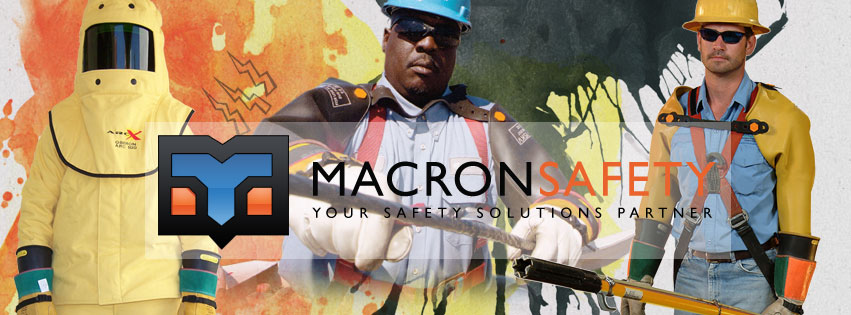
If you aren’t sure what type of protection you may need in your work environment contact Macron Safety and we will help you choose the proper clothing for your specific needs and possible electrical exposure.

Macron Safety also offers onsite arc flash safety training at your facility and complete line of Arc Flash Personal Protective Clothing from 5 cal/cm2 to 140 Ballistic cal/cm2.